Dusti Bongé and Dorothy Hood at the Ogden Museum of Southern Art, New Orleans, LA
'Vicinal Visions: Dusti Bongé, Ida Kohlmeyer & Dorothy Hood'
21 March – 19 July 2026
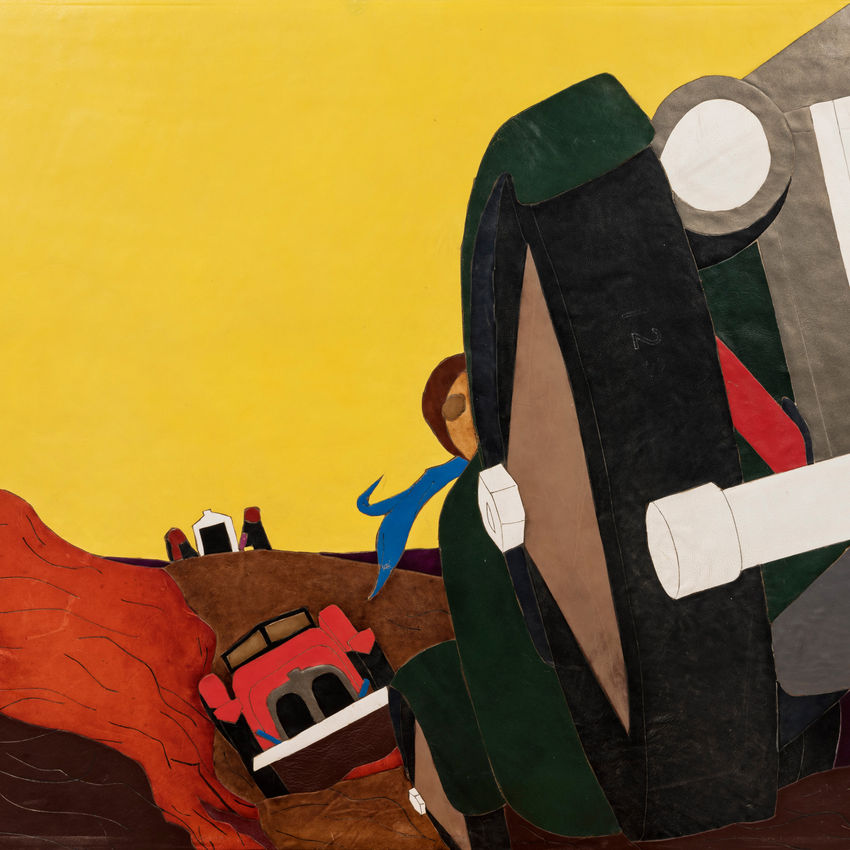
Throughout his life, Escalet honed a one-of-a-kind aesthetic language that fused a flat, stylized sense of space with an impressionistic folk art sensibility using cut leather.
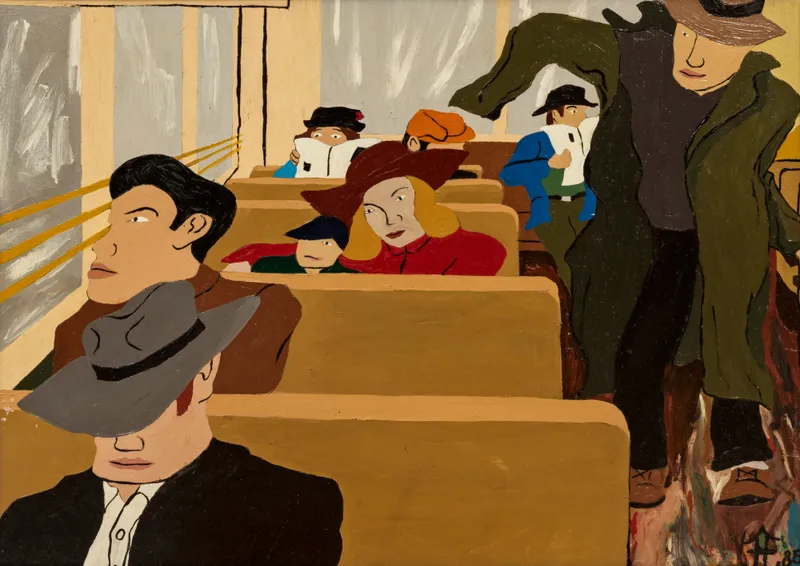
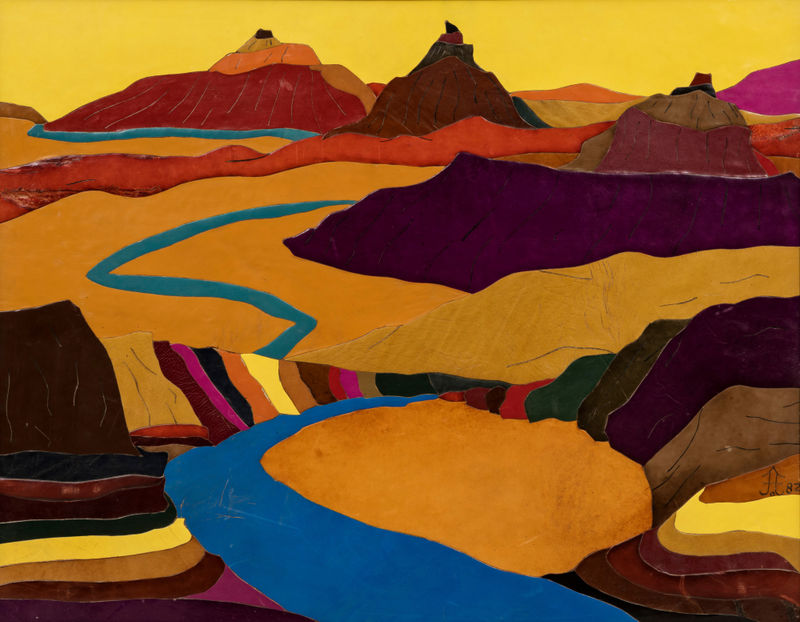
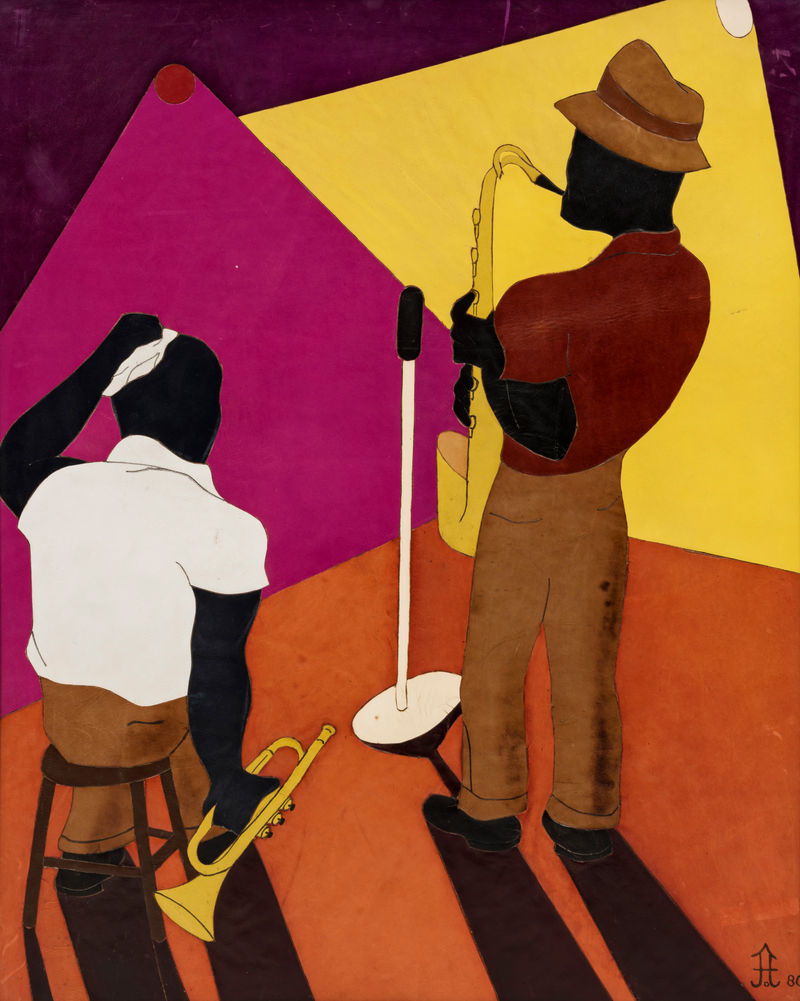
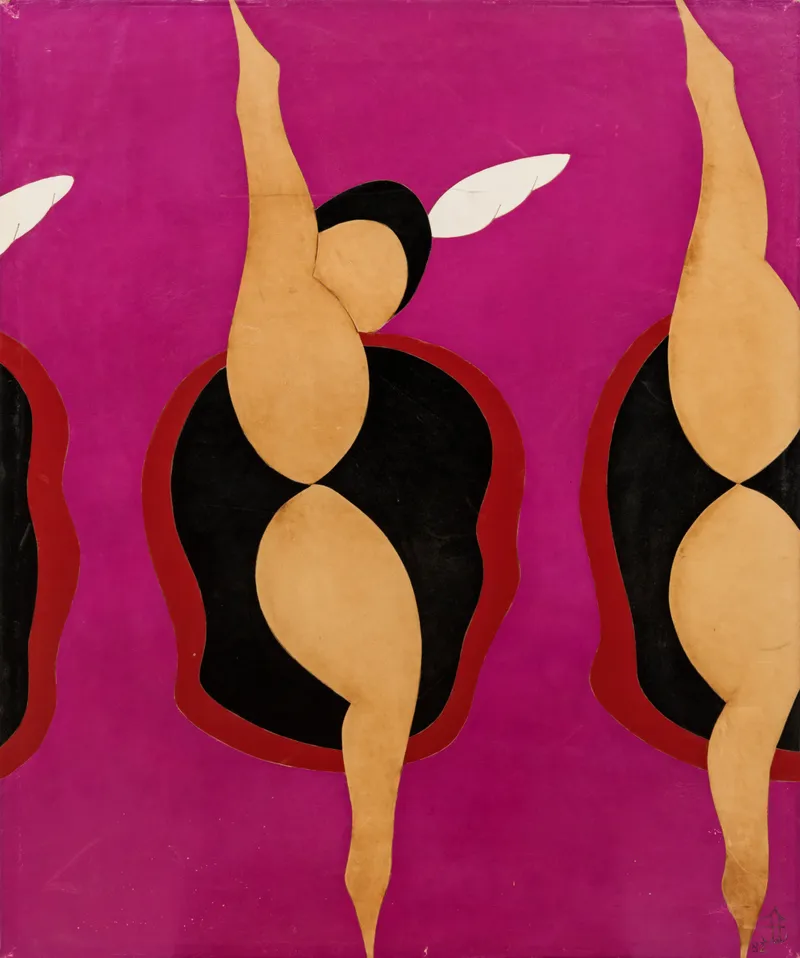
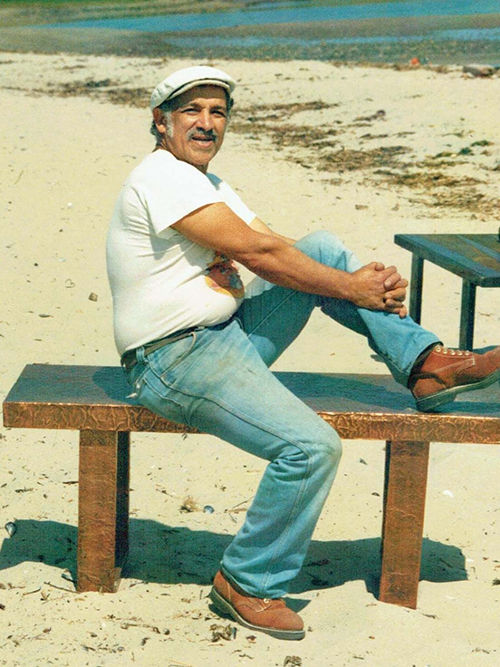
Puerto Rican-born American artist Frank Diaz Escalet (1930-2012) was a multitalented, self-taught painter and master leathercrafter whose extraordinary body of work ranged from scenes of urban life, jazz clubs of New York, and cowboys in Western landscapes to pared-down geometric compositions. Throughout his life, Escalet honed a one-of-a-kind aesthetic language that fused a flat, stylized sense of space with an impressionistic folk art sensibility using cut leather. His use of stained, inlaid leather pieces on Masonite yielded canvases that possess textured, sophisticated surfaces unachievable by traditional mediums like paint.
Puerto Rican-born American artist Frank Diaz Escalet (1930-2012) was a multitalented, self-taught painter and master leathercrafter whose extraordinary body of work ranged from scenes of urban life, jazz clubs of New York, and cowboys in Western landscapes to pared-down geometric compositions. Throughout his life, Escalet honed a one-of-a-kind aesthetic language that fused a flat, stylized sense of space with an impressionistic folk art sensibility using cut leather. His use of stained, inlaid leather pieces on Masonite yielded canvases that possess textured, sophisticated surfaces unachievable by traditional mediums like paint.
Born in Ponce, Puerto Rico in 1930, Escalet moved to New York at the age of four and grew up in Greenwich Village and Spanish Harlem. As a child he drew his own comic books and dropped out of school after the eighth grade to support his family, working full-time factory jobs. Despite his lack of formal education, Escalet took full advantage of fortuitous opportunities and cultivated a remarkable sense of perseverance and grit. “The more of a challenge something is,” he once explained, “the more fanatical I become. There’s a tremendous drive within myself that I will not stop.” (1)
Escalet’s exuberant canvases from the early 1970s memorialize the everyday lives and cultural expressions of New Yorkers in mid-twentieth century, particularly those of working-class Latinos and black Americans. His artworks were deeply personal expressions of his own lived experiences as a Puerto Rican immigrant in New York, as well as a more universalized, abstracted sociopolitical commitment to humanizing and dignifying fellow immigrants and ordinary working-class laborers. Like Norman Rockwell, Escalet was a consummate painter-storyteller, a master of deftly portraying the everyday dignity of his neighbors and friends with compassionate realism.
After serving in the United States Air Force for three years and being stationed in Liverpool, England unloading American ships for another three years, Escalet married his first wife in 1953 with whom he had two daughters. The couple divorced two years later. Upon moving back to New York, he learned metalworking while working at a gas station and opened his own jewelry shop called The Talent Shop in 1956. In 1958, Escalet pivoted to leatherware and with just $80 in his pocket, opened a leather shop in Greenwich Village called The House of Escalet. He enjoyed enormous success, and by the early 1960s, his clients included the Rolling Stones, Aretha Franklin, the Union Gap, and Pablo Casals, as well as institutions like the Museum of Modern Art for which he created leather cushions to be used on stone slab seats in the museum’s sculpture garden.
In 1964, Escalet married his second wife, Marjorie, to whom he was married until her death in 2012. Living in a large loft on the Bowery, which also functioned as the couple’s studios, Escalet frequented local jazz clubs after work to unwind. Drawn to the world of jazz, Escalet listened intently and obsessively to the greatest jazz artists of his day: Lester Young, Thelonious Monk, and Eric Dolphy, among others. Escalet often incorporated jazz and music as subject matter in his paintings, capturing swaying bodies and dynamic feet on crowded dance floors. Indeed, in a 2022 review, Roberta Smith wrote in The New York Times that Escalet’s works reflect an “ecumenical love of music.”
In 1971, Escalet moved his wife and son to Eastport, Maine, where they had a difficult time finding demand for his designs. Due to financial instability, Escalet began creating his celebrated inlaid leather canvases in 1974 that would comprise a large part of his artistic output. Conceptualized through what he called a “birds-eye-view of the world,” these leather compositions captured the dreams, hardships, and the prosaic beauty of iron workers, lobstermen, Latin American immigrants, domestic working women, couples enjoying an idyllic outdoor day, and interior scenes of Greyhound buses. Around this same time, Escalet also prolifically created acrylic canvases, experimenting with a similar breadth of subject matter. He did not use an easel for his paintings, preferring instead to paint horizontally on his leather workbench. In the late 1980s and 1990s, Escalet’s paintings took a more minimalist turn while still developing his outsider, folk sensibility; these later canvases evince large portions of negative space in canvases and increasingly abstracted shapes. Though enchanted by the natural beauty of Maine, Escalet struggled with his only child Danny’s death at the age of 18 in 1986. Soon after, Escalet poured himself full-time into his leather paintings.
Though Escalet was underrecognized for his artworks during his lifetime, he exhibited regularly in university museums. In 1988 he was the subject of a 30-minute episode of La Plaza, a program that showcased Latino culture and was broadcast by an affiliate of PBS. In 1990, 135 works by Escalet were featured in a traveling one-person show that opened in Prague and traveled to seven other countries behind the Iron Curtain in a “World Peace Tour” that lasted for five years.