Art Week NYC
11 – 14 November 2026

“Uniqueness of the image cannot be achieved by striving for it. It will emerge when the motivation is expressive of one’s feeling and if one has belief in oneself. This comes through forcefully to me in works that I love—this conviction, belief in oneself. It is a fire-eater that cracks your being apart, breathing energy into the work.” - Renée Miller
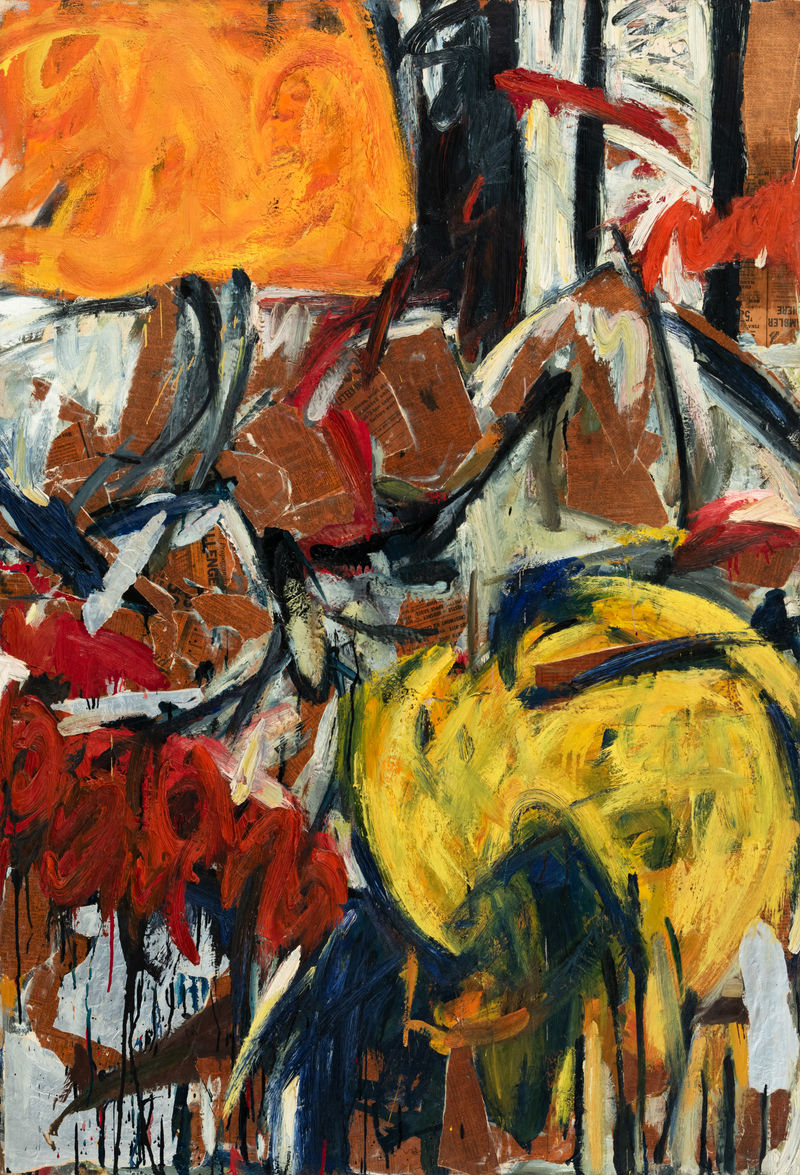
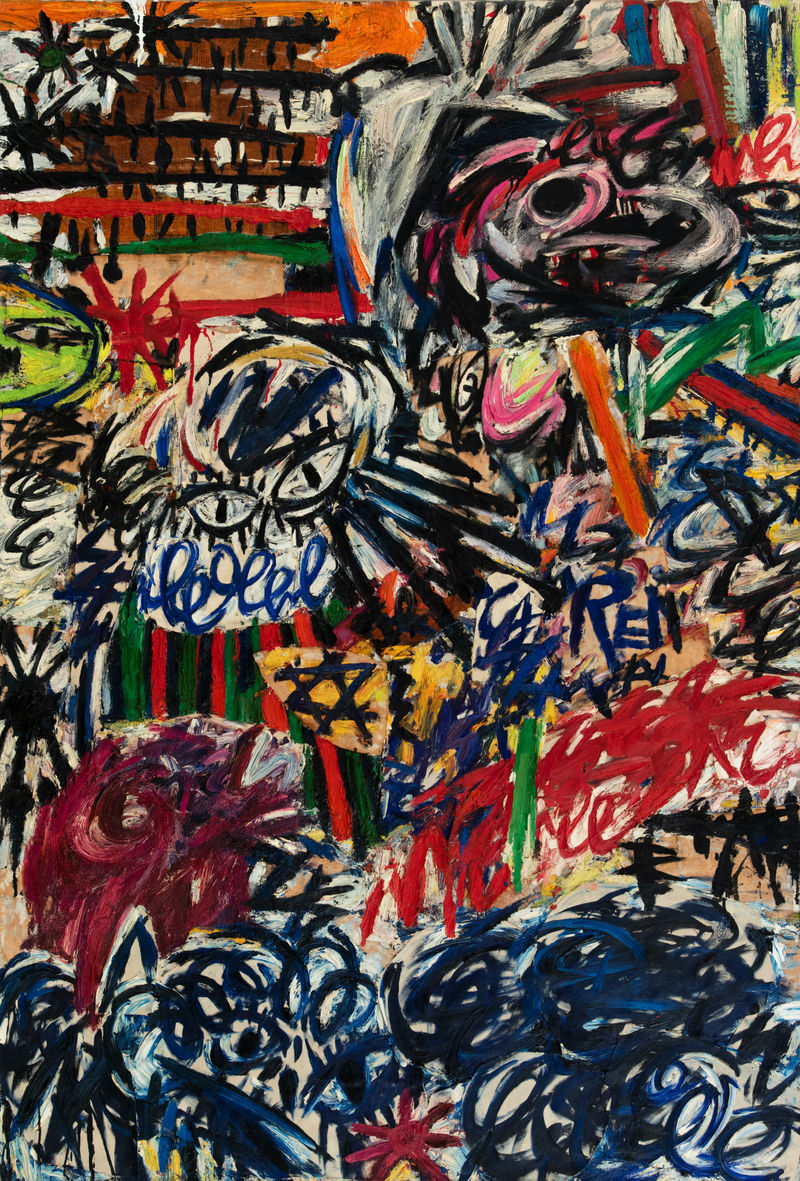
A key figure in Greenwich Village’s post-war avant-garde, the Brooklyn-born American artist Renée Miller (1929-2025) described the conviction needed to create art as “a fire-eater that cracks your being apart.” She was a core member of the Reuben Gallery, a historic, experimental downtown space known for hosting some of the first, now-iconic Happenings, and where she had her first solo show in 1960. Miller’s work from the late 1950s and early ‘60s featured electrifying, abstract canvases infused with spirited brushwork and uninhibited use of color. While she inherited the first-generation Abstract Expressionists’ infernal energy, her works—with their strong graphic sensibility (she was trained in both fine art and illustration)—signaled a new aesthetic radicalism presaging Pop.
A key figure in Greenwich Village’s post-war avant-garde, the Brooklyn-born American artist Renée Miller (1929-2025) described the conviction needed to create art as “a fire-eater that cracks your being apart.” She was a core member of the Reuben Gallery, a historic, experimental downtown space known for hosting some of the first, now-iconic Happenings, and where she had her first solo show in 1960. Miller’s work from the late 1950s and early ‘60s featured electrifying, abstract canvases infused with spirited brushwork and uninhibited use of color. While she inherited the first-generation Abstract Expressionists’ infernal energy, her works—with their strong graphic sensibility (she was trained in both fine art and illustration)—signaled a new aesthetic radicalism presaging Pop.
Born Renée Rubin on November 9, 1929—at the cusp of the Great Depression—Miller was raised in Brooklyn by orthodox Jewish parents. She spent her adolescence attending Midwood High School, riding the Cyclone roller coaster at Coney Island, and seeing a young Frank Sinatra perform at the Brooklyn Paramount. When she was twenty-one years old, against her parents’ wishes, Miller moved to Greenwich Village to pursue her dreams of becoming an artist, renting a loft on 17th Street for ten dollars a month and attending the New York School of Painting and Sculpture on a scholarship. At one point, Miller also took classes at the Hans Hoffman School of Fine Arts and the Brooklyn Museum Art School. She found herself in the thick of a scrappy downtown New York art scene that was filled with post-war euphoric energy and esprit de corps shared by fledgling, adventurous artists and writers. At night, Miller and her husband David frequented Caffe Reggio, a large coffeehouse on Macdougal Street where they met friends, including the poet Howard Ant and filmmaker Stanley Kubrick.
Miller’s solo exhibition at the Reuben Gallery in 1960 featured collages, drawings, canvases, and what she called “extension paintings,” irregularly shaped, anarchic canvases that implode the edges of a frame. Described by the critic Lawrence Alloway as “steam-rollered bouquets,”1 Miller’s extension paintings—like Bug, Mask, and Stars (1959)—materialize through thick brushstrokes and a seething cosmology of puckish, toothy monsters, stars, and firecrackers. Her paintings from this period combine expressionism with the grittiness and naïve-style of artists like Jean Dubuffet, who rebelled against prevailing notions of good taste and propriety.
In her statement that accompanied the show, Miller wrote that “uniqueness of the image cannot be achieved by striving for it. It will emerge when the motivation is expressive of one’s feeling and if one has belief in oneself. This comes through forcefully to me in works that I love—this conviction, belief in oneself. It is a fire-eater that cracks your being apart, breathing energy into the work.” Five years later in 1965, Miller’s work was included in a group show at the Solomon R. Guggenheim Museum organized by Alloway, as a tribute to the Reuben Gallery.
As a core member of the Reuben Gallery along with Allan Kaprow, Claes Oldenburg, Red Grooms, Robert Whitman, Jim Dine, and Martha Edelheit, who all shared a commitment to stretching the established borders of art, Miller was integral to the gallery’s two-year run.2 When Miller’s younger sister Anita opened the Reuben Gallery in 1959, Miller brought in Kaprow, with whom she frequented gallery openings. Motivated to support a growing group of artists interested in avant-garde artmaking, Anita secured a lease for a space, using the biblical spelling of her surname, Reuben, as the gallery name.3
In the following decades, Miller indefatigably experimented with various mediums and styles, and her spatial concerns took on various forms. In the 1960s, she created her "Holocaust series," a series of hanging wire sculptures of corpses that gave form to historical trauma. These larger-than-life sculptures are made of chicken wire wrapped with canvas and paint, and amplify her existing concerns with extending the canvas into space, beyond the bounds of its frame. During the 1960s and 1970s, Miller also made styrofoam sculpture paintings that explore theatricality and movement. These dynamic, painted styrofoam sculptures capture the pop art vitality of the decade and redefine the distinctions between painting and sculpture. In the late 1970s, Miller turned to paintings of sexuality and erotic scenes. Using a distinctly muted, softly pastel-colored palette, these paintings explore the extremes of the human body, which is contorted to fit within the constraints of the canvas. In the 1980s, Miller began creating exquisitely rendered still-lives, inspired by the Old Masters, particularly Spanish Baroque painting, though she imbued her compositions with a subtle Surrealist quality.
Miller’s work received significant institutional attention in her lifetime, and was included in the exhibition “New Forms, New Media I” at the Martha Jackson Gallery in 1960 and “Eleven from the Reuben Gallery” at the Guggenheim Museum in 1965. In 2017, Miller’s work was featured in “Inventing Downtown: Artist-Run Galleries in New York City, 1952-1965," a retrospective at the Grey Art Gallery at New York University.