Art Week NYC
11 – 14 November 2026


OPENING RECEPTION
Thursday, October 22, 6:00-8:00 pm
RSVP: rsvp@hollistaggart.com or +1 212 628 4000
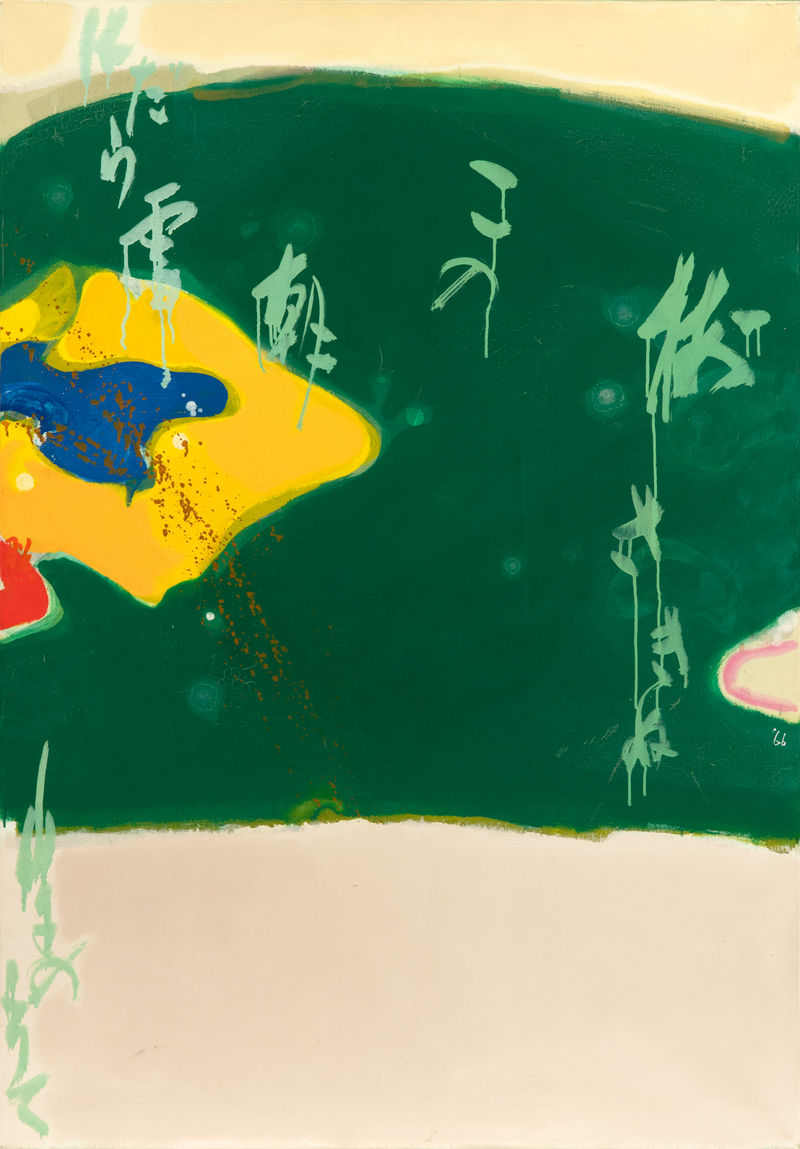
Across five decades, Yokoi developed an increasingly distilled language for expressing her surrounding landscape, transforming her observations and recollections into compositions of remarkable lyricism and restraint.
Hollis Taggart is pleased to present Teruko Yokoi: Seasons, the second solo exhibition of the artist's work since partnering with the estate in 2025. Continuing the gallery's commitment to illuminating various elements of her practice, the show brings together paintings and works on paper from the mid-1950s through the early 2000s that reveal her enduring engagement with the natural world. Teruko Yokoi: Seasons will be on view in Hollis Taggart's flagship Chelsea location from October 22 through November 25, 2026. An opening reception will be held Thursday, October 22 from 6 to 8 PM.
Hollis Taggart is pleased to present Teruko Yokoi: Seasons, the second solo exhibition of the artist's work since partnering with the estate in 2025. Continuing the gallery's commitment to illuminating various elements of her practice, the show brings together paintings and works on paper from the mid-1950s through the early 2000s that reveal her enduring engagement with the natural world. Teruko Yokoi: Seasons will be on view in Hollis Taggart's flagship Chelsea location from October 22 through November 25, 2026. An opening reception will be held Thursday, October 22 from 6 to 8 PM.
Across five decades, Yokoi developed an increasingly distilled language for expressing her surrounding landscape, transforming her observations and recollections into compositions of remarkable lyricism and restraint. Rather than direct representations, she expressed sensual impressions of the world around her. The changing seasons emerge not as literal subjects, but as sensations of light, darkness, growth, and decay.
Nature had been central to Yokoi's experience from childhood. As a young girl, she began taking regular walks through fields and forests with her father, a master calligrapher and poet. They called their walks "haiku hiroi," which means "collecting haiku," as the two were seeking inspiration for writing haiku poetry. Those walks remained an important practice Yokoi continued throughout her life, no matter where she was living, and the artist occasionally equated her paintings to poems about nature. As a young teenager, Yokoi began submitting her work to competitions in Japan. After studying traditional Japanese painting, she left for San Francisco in the early 1950s to attend the California School of Fine Arts. There, she first encountered European and American abstraction before moving to New York in 1955 to study with Hans Hofmann.
The earliest works in Seasons date from this formative New York period. In the Indian ink drawings of 1955-57, Yokoi's use of the bamboo brush connects her emerging abstract vocabulary to the discipline of Japanese brushwork. The Beresford at 211 Central Park West (1955/56) records her new urban surroundings, from a point of view within the lush parkscape. Abundant trees in the foreground are rendered as substantially as the monolithic apartment building behind them. Another untitled work from the same moment moves even further from an identifiable place toward atmosphere and gesture. Even at this early stage, the relationship between observation and abstraction is apparent: landscape provides a point of departure, but the experience of looking-and the movement of the brush-becomes the subject.
Yokoi continued to blur her imagery throughout the 1960s. Following a separation from her husband, the American painter Sam Francis and a relocation to Bern, Switzerland in 1962, Yokoi found herself in a European environment that nonetheless could evoke the Japan of her childhood. Pfirsichblumen (1966), Spring festival (1966), and Autumn festival (1966) translate the rhythms of flowering and withering into vibrant fields of color and energetic forms. Pfirsichblumen (the German term for peach blossom), in particular, reflects Yokoi's ability to evoke the natural world without describing it directly: the suggestion of blossoms in an energetic palette of reds and pinks evokes the emotional experience of color, movement, and atmosphere of vernal blooming.
Her paintings increasingly inhabited the space between what is seen and what is remembered. In Autumn light (1976) and Herbstlandschaft (1980), seasonal shifts are registered through subtle changes in color and luminosity, while March, Diptychon (1981), and June (1989), translate particular moments of the year into spare, poetic compositions. Winter could take on an austere character in Yokoi's work, with expanses of space and restrained marks suggesting the stillness of a snowy terrain, but even works like Summer Night 1 and 2 (both 1989) seem to transcribe a more solemn, psychological encounter with midsummer twilight.
Yokoi's conception of the seasons was expansive. In her self-published 1990 book The Five Seasons, she included the Japanese New Year, or Oshogatsu, as a fifth season-a brief interval of renewal within winter. This understanding of cyclical change resonates throughout the later works in the exhibition, including Mid autumn (2000) and the intimate Japanese Diary works of 2005. Working mainly in egg tempera, Yokoi increasingly sought to capture the sensations of nature through carefully controlled materials and gestures.
Seen together, the works in Teruko Yokoi: Seasons reveal how profoundly the passage of time shaped Yokoi's art. Earthly phases shift across the exhibition: spring gives way to summer, autumn to winter, and darkness to light, each moment transformed by memory and experience. For Yokoi, the recurrent thrum of nature's year was at once a source of beauty and a reminder of impermanence. Annual fluctuations become experiences to move through: remembered, imagined, and continually renewed through the act of painting.
Teruko Yokoi (1924-2020) has been the subject of over ninety exhibitions, including two solo shows at the Palace of the Legion of Honor, San Francisco, as well as group shows at Martha Jackson Gallery, New York, Galerie Kornfeld, Bern, and Marlborough Gallery, New York. Her last major retrospective entitled Teruko Yokoi: Tokyo-New York-Paris-Bern was presented by the Kunstmuseum in Bern in 2020. Two museums in Japan, the Teruko Yokoi Hinageshi Museum and Teruko Yokoi Fuji Museum of Art in Shizuoka are dedicated to her work. She is also part of many important permanent collections in Switzerland, including the Kunstmuseum Bern, the University of Bern, and the UBS Art Collection, Zürich.
For more information about Seasons, please contact us at info@hollistaggart.com or +1 212.628.4000.
For press inquiries, please contact Aga Sablinska at aga.sablinska@gmail.com or +1 862.216.6485.